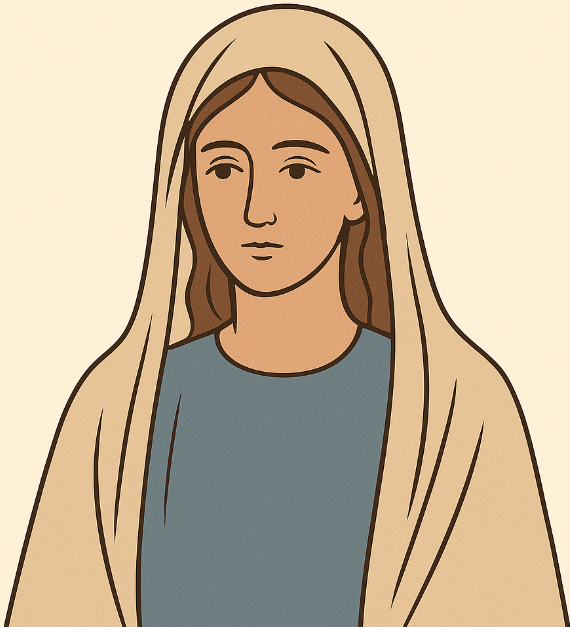
Mary, Mother of God: Understanding the Theotokos Controversy
Who Is the Theotokos?
“Theotokos” is a Greek word meaning “God-bearer” or “Mother of God.”
For Catholics, this title for Mary expresses a deep truth: because Jesus Christ is both fully God and fully human, Mary is rightly called the Mother of God. But this belief was not always universally accepted—it sparked one of the most important theological debates in early Church history.
The Roots of the Controversy
In the early 400s, the Church was still clarifying how Jesus could be both divine and human at the same time. The heart of the issue was not about Mary herself, but about who Jesus is.
A bishop named Nestorius, who became Patriarch of Constantinople in 428 AD, taught that it was incorrect to call Mary “Theotokos.” He argued that Mary gave birth only to Jesus’ human nature, not to His divine nature. According to Nestorius, Mary should be called “Christotokos,” or “Mother of Christ,” instead.
But this created a big theological problem. If Mary only gave birth to Jesus’ human side, was Jesus really one unified person—both God and man—or two separate beings?
The Council of Ephesus: 431 AD
The controversy reached a breaking point at the Council of Ephesus in 431 AD. St. Cyril of Alexandria led the defense of Catholic teaching, insisting that Jesus is one divine person with two natures—human and divine. Because of this unity, the person Mary gave birth to is God Himself in human flesh. Therefore, it is correct and necessary to call her Theotokos.
The Council condemned Nestorius’ teaching as heresy and solemnly declared Mary as Mother of God. The bishops proclaimed:
“If anyone does not confess that Emmanuel is truly God, and that therefore the Holy Virgin is the Mother of God (Theotokos), let him be anathema.”
This decision wasn’t just about Mary—it protected the truth of the Incarnation: that God truly became man in Jesus Christ.
What Scripture Says
The title Theotokos is not a later invention—it flows directly from Scripture.
- Luke 1:43: When Elizabeth greets Mary, she cries out, “And why is this granted to me, that the mother of my Lord should come to me?”
In Jewish tradition, “Lord” (Kyrios) is the divine name used for God.
Elizabeth is acknowledging that Mary is the mother of the Lord—of God Himself. - John 1:14: “And the Word became flesh and dwelt among us.”
If the eternal Word of God truly became human in the womb of Mary, then she bore God made flesh. - Galatians 4:4: “When the fullness of time had come, God sent forth his Son, born of a woman.”
This verse shows that the divine Son—God Himself—was truly born of Mary.
The Church’s Teaching Today
The Council of Ephesus settled the debate once and for all. Later councils, including Chalcedon (451 AD), confirmed that Jesus Christ is one person in two natures—divine and human—without confusion, change, division, or separation.
The Catechism of the Catholic Church (Paragraph 495) states:
“Called in the Gospels ‘the mother of Jesus,’ Mary is acclaimed by Elizabeth, at the prompting of the Spirit, as ‘the mother of my Lord.’ In fact, the One whom she conceived as man by the Holy Spirit, who truly became her Son according to the flesh, was none other than the Father’s eternal Son, the second person of the Holy Trinity. Hence the Church confesses that Mary is truly ‘Mother of God’ (Theotokos).”
This teaching remains central to Catholic faith and devotion. It safeguards the truth that Jesus is both fully God and fully human—a truth at the very heart of salvation.
Why It Matters for Catholics Today
Calling Mary Theotokos reminds us that our faith is deeply incarnational. God did not stay distant; He entered human history through a real woman, in a real body, in a real moment of time. By saying Mary is the Mother of God, we proclaim the mystery of the Incarnation—that God became one of us to save us.
When Catholics honor Mary, we honor the One she bore. Every “Hail Mary” echoes the angel’s words in Luke 1:28, celebrating the miracle of God’s coming into the world through her faithful “yes.”
Conclusion: The Theotokos and Our Faith
The Theotokos controversy taught the Church an essential truth: understanding Mary helps us understand Christ. Mary’s title, Mother of God, doesn’t make her divine—it affirms that her Son is truly God.
As we pray, reflect, and celebrate Marian feasts, we remember that through Mary, the Word became flesh.
And through her intercession, we are continually drawn closer to her Son, Jesus Christ—true God and true man.